A Happy Marriage Starts with Consent
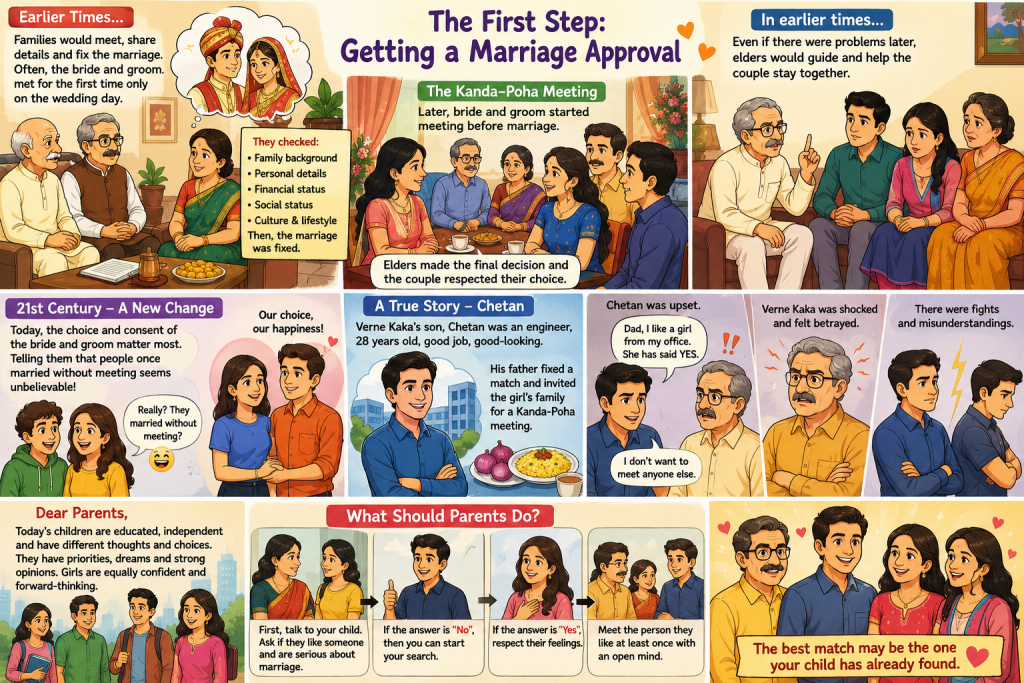
Marriage in earlier times was very different from what it is today. Families would carefully gather information about each other—their background, values, financial stability, social standing, and lifestyle—before finalizing a match. In many cases, the bride and groom met for the first time only on their wedding day.
As society evolved, prospective brides and grooms began meeting before marriage through the traditional "Kanda-Poha" ceremony. While these meetings allowed the couple to interact, the final decision was still largely made by the elders. The young bride and groom would usually accept their family's choice and begin their married life with trust and respect.
Like every marriage, they faced occasional disagreements. However, elders played an important role in resolving conflicts and helping couples maintain harmony in their relationships.
The 21st century has changed the dynamics of marriage significantly. Family approval remains important, but today's generation finds it difficult to imagine marrying someone they have never met or spoken to. Personal choice, compatibility, and mutual understanding have become essential considerations.
Today, the most important first step in marriage is the consent and willingness of the prospective bride and groom. Their emotional readiness and genuine interest in the relationship matter more than ever.
An experience from Saptapadi Vivah highlights this reality.
Verne Kaka's son, Chetan, was a 28-year-old engineer with a good job, a handsome salary, and a bright future. Believing that his son would agree to any suitable match selected by the family, Verne Kaka began searching for a bride.
Soon, he found a promising proposal and invited the girl's family home for a traditional bride-seeing ceremony. Although Chetan was aware that his father was looking for a match, he never expected things to move so quickly.
Just two days before the meeting, Chetan requested his father to cancel the program. When asked why, he revealed that he was in love with a colleague from his office and that she had recently agreed to marry him. Therefore, he was unwilling to meet another prospective bride.
The news came as a shock to Verne Kaka. He was upset, confused, and unsure how to explain the cancellation to the girl's family. More importantly, he felt hurt that his son had not shared this information earlier.
What followed were several arguments between father and son. The disagreement became so intense that Verne Kaka was unwilling even to meet the girl Chetan had chosen.
Many parents around us are like Verne Kaka. They dedicate time and effort to finding suitable matches for their children but sometimes overlook a simple reality—today's young men and women are educated, financially independent, and capable of making their own decisions.
They have their own priorities, ambitions, lifestyles, and expectations. Girls today are equally confident and independent, with clear opinions about the kind of life partner they seek.
Therefore, before beginning the search for a match, parents should first have an open and honest conversation with their children. Ask them whether they already like someone and are considering marriage.
If the answer is "No," the search can continue with their full support and involvement.
But if the answer is "Yes," true wisdom lies in listening with an open mind. Meet the person they have chosen before forming conclusions. You may discover that the partner they selected is not only suitable for them but also a wonderful addition to the family.
After all, a successful marriage begins with understanding, trust, and consent.
Sometimes, the best match is the one your child has already found.
4th June, 2026








Leave a Comment