Addiction: A Habit, or a Choice That Changes Lives?
Addiction: A Habit, or a Choice That Changes Lives?
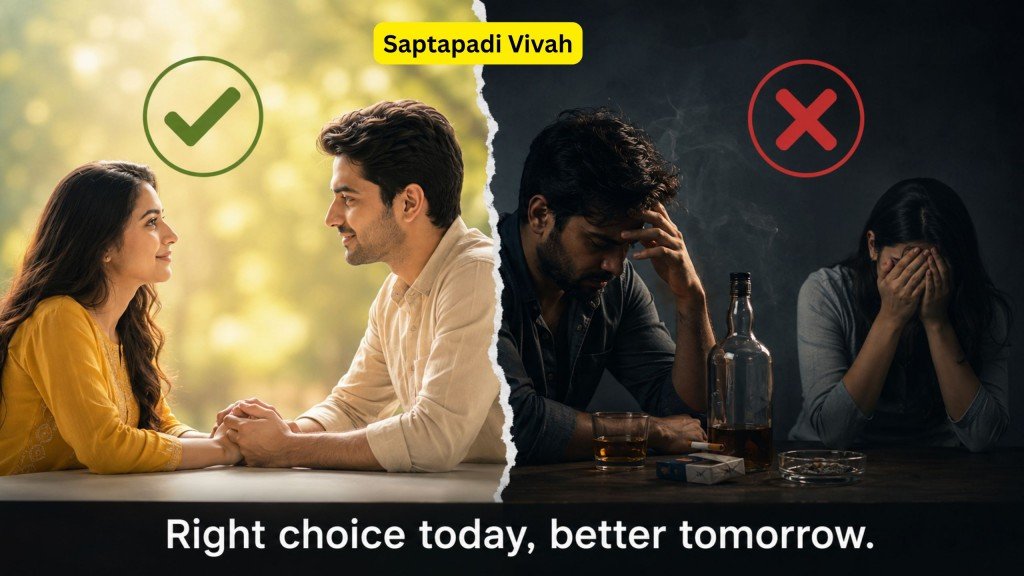
When Meera first met Rahul, he seemed perfect. He was well-educated, charming, respectful, and came from a good family. During family gatherings, he occasionally smoked or had a drink. Everyone dismissed it with a smile.
"It's just a habit. All young people do it."
After marriage, Meera slowly discovered a different reality.
The occasional drink became a daily necessity. A cigarette was no longer enough. Every stressful day ended with alcohol, and every celebration began with it. Promises to quit lasted only a few days. Their savings disappeared. Arguments became frequent. Their child started hiding whenever Rahul came home late.
One evening, Meera quietly asked,
"Why can't you stop?"
Rahul looked down and replied,
"I don't know when my habit became my master."
The saddest part was not that he had an addiction. It was that everyone had noticed the warning signs before marriage but chose to ignore them.
Many people believe addiction is always the result of emotional trauma, stress, depression, or bad company. While these factors can certainly contribute, they do not tell the whole story.
On a practical level, addiction often begins with repeated personal choices. Sometimes it reflects an inability to cope with struggles, face reality, handle disappointment, or resist social pressure. At times, people mistake harmful habits for symbols of modernity, freedom, or success. What starts as an occasional experiment gradually becomes a dependency that controls thoughts, decisions, and relationships.
Marriage is not just a union of two individuals—it is the coming together of two families, two futures, and often the dreams of future children. That is why understanding whether a prospective life partner has any form of addiction is extremely important.
An addiction rarely harms only the person who has it. It affects everyone around them. A spouse may lose peace of mind, financial security, trust, emotional support, and sometimes even personal safety. Children raised in such an environment often carry emotional scars into adulthood.
One important question to ask is:
Is it merely a habit, or has it become an addiction?
The difference is simple.
A person with a habit can choose to stop.
A person with an addiction struggles even when they sincerely want to stop.
Before making one of the biggest decisions of your life, keep your eyes open. Observe carefully rather than judging quickly.
Notice whether the person:
-
Needs alcohol or tobacco to enjoy every gathering.
-
Becomes restless or irritable when unable to use the substance.
-
Makes repeated promises to quit but never follows through.
-
Hides the frequency or quantity of use.
-
Justifies every use with excuses like "I'm stressed," "Everyone does it," or "I can stop whenever I want."
Love should never blind us to reality.
Marriage requires trust, responsibility, self-control, and emotional strength. These qualities build a happy family. Addiction slowly weakens each one of them.
Choose a life partner with an open heart—but also with open eyes. A few careful observations before marriage can prevent years of pain afterward.
Blog Credit
Saptapadi Vivah
22nd July, 2026







Leave a Comment